

Once in a while a structural beam rots out and your whole life comes crashing down. That happened to me in early 2005. I was invited into a meeting room and informed my services would no longer be required at Derwent Howard Publishing. I was 27 at the time.
In a sense, I’d brought it on myself. For the previous two years I’d worked on a magazine called What DVD (back then you could still sell a magazine about DVDs) and in many ways it was my dream job. If it had been my sole responsibility, I probably would have remained as editor of What DVD until it died a natural death. But in addition to this monthly 98-page magazine, which I was producing with the aid of a designer and a small clutch of freelancers, I was also editing a monthly Kmart catalogue and occasionally creating movie-themed magazines from scratch. That’s right, sometimes I was putting out three titles a month.
‘Busy’ doesn’t describe it; some days I’d arrive in the office at 8am and still be making notes on DVD special features at 11pm, only stopping in between to eat or commute. For these CEO-style hours I was remunerated precisely $45,000 per year.
Sometimes I am pathologically honest, and that’s why I went to one of the publishers and declared, “I’m not coping. I love my job, but I’m starting to burn out.”
Rather than investigate ways to lighten my workload, the publisher’s ‘solution’ was to close What DVD immediately and have me work across an assortment of other titles. This seemed a rather drastic measure, but I simply shrugged my shoulders and went along with it. I was there to create interesting magazines, not make business decisions.
Then, a couple of months later, kaboom. I took my paltry redundancy payout and left the Derwent Howard offices, jobless and shellshocked. My girlfriend and I had a car loan and rent to pay, so I didn’t have much time to dwell on the redundancy’s psychological effects. I started doing some rats-and-mice freelance work while applying for new jobs. In the past, I’d moved from role to role with a ballerina’s insouciant grace, so I didn’t foresee any troubles finding a new job.
Three months later, I was still unemployed.
That depressing period of my life wasn’t an out-and-out write off – in addition to job hunting I also wrote my first published novel, Ghost Kiss – but desperate for full-time work, I accepted a role as sub-editor on That’s Life magazine. Fatefully (in the context of this article, anyway), it was published out of Pacific Publications in North Sydney.
In some ways Derwent Howard felt like a gentleman’s club for the 21st century: due to the content of the magazines (video games, DVDs, technology), the staff was overwhelmingly young and male. The Christmas parties became the stuff of legend and infamy. Most days DH felt as much like a frat house as a workplace. In contrast, the editorial team on That’s Life was almost entirely female, corporate and strait-laced. The chief sub, the only other man, was ex-military. Everyone was nice enough, but I didn’t feel any great urge to foster friendships.
Which meant I spent most lunchtimes either at the gym or reading a book. North Sydney had an excellent bookshop and, if I needed new reading material, I would spend a pleasant half-hour or so browsing its shelves.
During one of these browsing sessions I picked up a book titled Three Wishes. Why it caught my eye don’t recall; perhaps I’d investigated everything else and decided to move outside my typical sphere of interest. I read the first couple of paragraphs and bought the book on impulse.

Back then, Liane Moriarty was just another chick-lit author in a literary marketplace churning with chick-lit authors. But her writing had a spark that set her apart. Her characters were recognisably Australian, specifically from Sydney’s northern suburbs, and Moriarty seemed to understand Aussies and their motivations far better than most of Australia’s so-called ‘literary’ writers.
I went on to purchase her next two novels, The Last Anniversary, and What Alice Forgot. I enjoyed Last Anniversary, which invoked a strong sense of place, but as a long-time speculative fiction reader I was less enamoured of What Alice Forgot. Here’s the telling paragraph from a review I wrote back then:
Moriarty’s prose is clean and easy to read, if a little inelegant at times. She also painted herself into a corner as far as the denouement: Neither the ‘realistic’ nor the happily-ever-after ending would have quite rung true.
That was in 2009, nearly four years after my short six-month stint at That’s Life. I sort of parted ways with Moriarty after that. Call it an amicable separation. Then, in early 2018, I was waiting for a flight at Sydney Airport and nosing around in the bookshop for something to read. Nothing appealed… but then I spotted the name Liane Moriarty. When I picked up Truly Madly Guilty, it felt like contacting an old flame on Facebook. I read the blurb and the first paragraph, then trotted up to the counter and bought it.
I expected an entertaining book. What I didn’t expect was Moriarty’s prodigious improvement as an author – that spark I detected in 2005 had ignited into a full-blown bonfire. Her approachable prose, high concept ideas and understanding of human foibles remained, but she had added to her authorial quiver a mastery of suspense, intricate plotting, and thematic weight equal to that of critical darlings like Chris Tsolakis. Truly Madly Guilty, despite its remnant chick-lit trappings, is unquestionably great Australian literature. Here’s the brief review I posted on Goodreads:
When she is on song, Liane Moriarty is one of the best Australian authors working today – and Truly Madly Guilty is an absolute masterpiece. Relatable characters, intricate storyline, a wicked twist, and an awful lot going on below the text. Easily the best book of hers I’ve read.
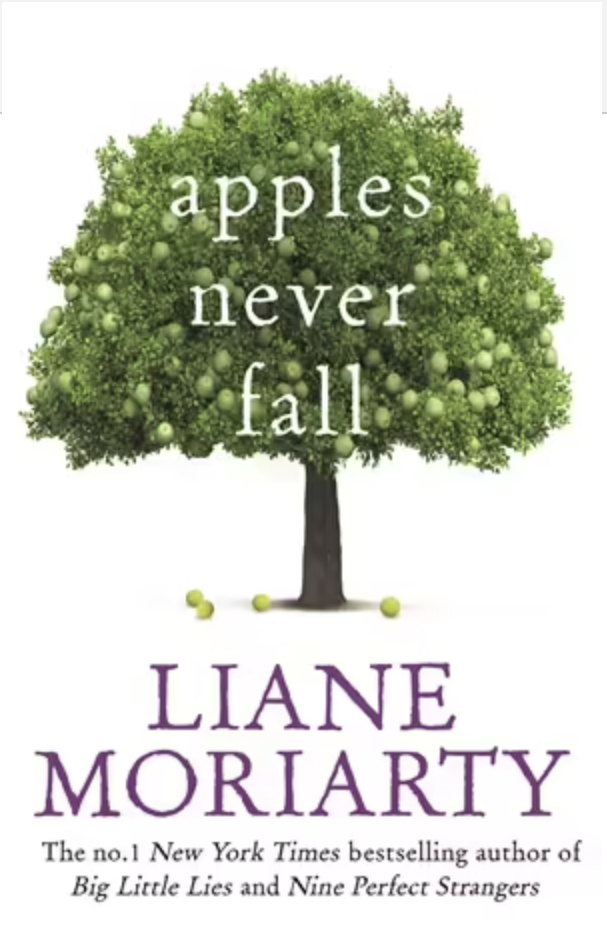
I’m presently reading her latest book, Apples Never Fall, and while it doesn’t quite have TMG’s atomic impact, it does have all the modern Moriarty hallmarks. When I’m reading her books, I get an image of an old steam locomotive. First it’s idle at the station, loading up with passengers, then it lurches forward and commences a slow chugging, before building up speed and then roaring along in a cloud of smoke, cinders and noise.
Yes, my association with Liane Moriarty has been quite a ride.



 Kris Ashton
Leave a reply to parrick Cancel reply