
As more than one writer of horror fiction has noted, there are a finite number of tropes in the genre which authors have been milling over and over for the past hundred years or so. My favourite of these is what Stephen King (via one of his characters) in Nightmares and Dreamscapes referred to as ‘the peculiar little town’.
The peculiar little town is to a horror writer what a slow lob over the net is to a tennis player. The situation is the perfect set up, because all the elements that make horror fiction work are built in. Alienation, paranoia, fear of the unknown, a sense of wrongness, a sense of not belonging. If you can’t deliver a creeping tale of horror set in a peculiar little town, you should probably try a different genre.
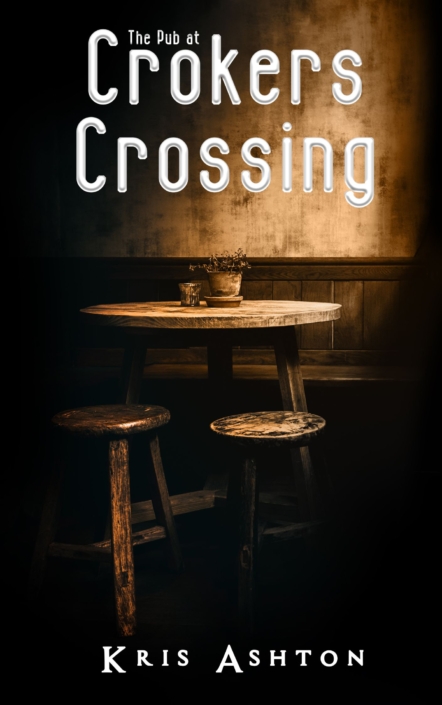
I’ve visited peculiar little towns again and again in my fiction, most recently in my novella ‘The Pub at Crokers Crossing’, published through Black Hare Press. The small town milieu triggers my imagination. Every time I write such a story I think, Well, that’s gotta be the last one, I’ve exhausted the well of peculiar little town ideas. And then six or twelve or eighteen months later, I’ll find the well isn’t as quite as dry as I thought.
It’s habit forming, no question, and as King also noted, one peculiar little town story is much the same as another when you strip off the bunting. But the corollary is that readers never seem to tire of the trope, either, as this recent review on Kobo indicates. That’s probably because the feelings the peculiar little town story elicits are so universal. Even a reader who is not typically interested in horror fiction can get a kick out of one.
A peculiar little town story needn’t be horror, by the way; small towns are a terrific setting for psychological tension and drama as well. So if you’re a budding author who is struggling with writer’s block, cast aside whatever project you’re working on and have a stab at one. The soil of the peculiar little town is fertile. Why not stay a while and see what you can grow?


 Kris Ashton
Leave a comment