
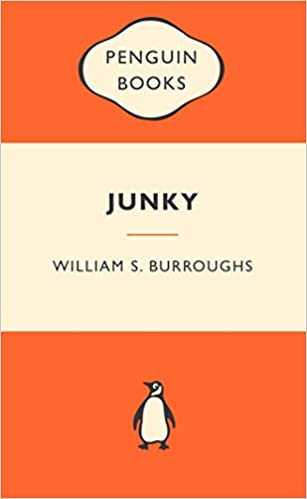
I have in my possession a copy of Junky (1953) by William S. Burroughs. It’s a 2009 Penguin Classics edition, which means it hasn’t spent long in my book collection, yet I have no idea how I came to own it. An impulse purchase at an airport, perhaps. I’d always believed I’d read it, yet when I picked it up again recently and began to thumb through the pages, I discovered I had abandoned it a short way in. I could see why; it’s a series of loosely connected autobiographical vignettes disguised as fiction and provides little that could be construed as a storyline.
This time around I persevered (it improves as it goes along) and got through all its pages, including the introduction and the glossary. There have been all sorts of retroactive attempts to justify Junky as a classic – an existentialist classic, a counter-culture classic, a gonzo classic published while Hunter S. Thompson was still a wet-behind-the-ears Air Force enlistee. But what I came away with was an appreciation for how limited the shelf-life of transgressive fiction can be.
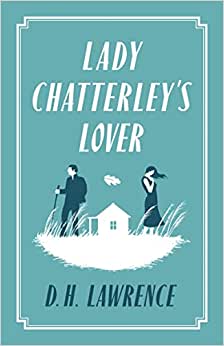
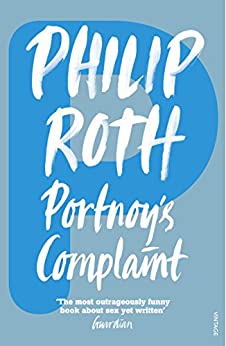
Between 1930 and 1970, literature pushed boundaries more than ever before, depicting with bare honesty things which up to that point had been proscribed by restrictive Victorian-era mores. In Lady Chatterley’s Lover (1928), D. H. Lawrence was scandalously truthful about sexual desire. With Junky, Burroughs lifted the lid on homosexuality and drug use. In Portnoy’s Complaint (1969), Philip Roth went into obscene detail about sexual fetishes. In each case, the transgressive topics about which the authors wrote lent them notoriety, but once the shock factor wore off, their work was left to survive on its merits – and in all three cases, the results were middling.
Lawrence probably fares best, his tale of forbidden love between the titular lady and her gamekeeper at least employs a classic theme, although tiresome pacing and prose make his book a bit of a slog. Junky is the most competently written of the trio, with vivid descriptions of hard drug use and a kind of sordid energy running through it, but the choppy non-storyline and abrupt ending make it feel more like a series of diary entries than a novel. Portnoy’s Complaint is easily the worst of the lot, transgressive for the sake of it and marred by an absurdist streak that divorces it from reality.
Transgressive fiction can be done well. Chuck Palahniuk has made an authorial brand out of it. But even he is selling himself short, in my opinion, because his stories and novels have literary merit beyond their shock value. His transgressive topics are a means to a thematic end, not a cheap trick, and for that reason his work likely won’t age in the same fashion as the novels mentioned above.
It’s a salutary lesson for any neophyte author. Write about whatever the hell you like, but make sure you have a sound reason for choosing your subject matter. Gratuitously pushing boundaries and breaking taboos might draw short-term attention, but it won’t result in timeless literature.


 Kris Ashton
Leave a comment